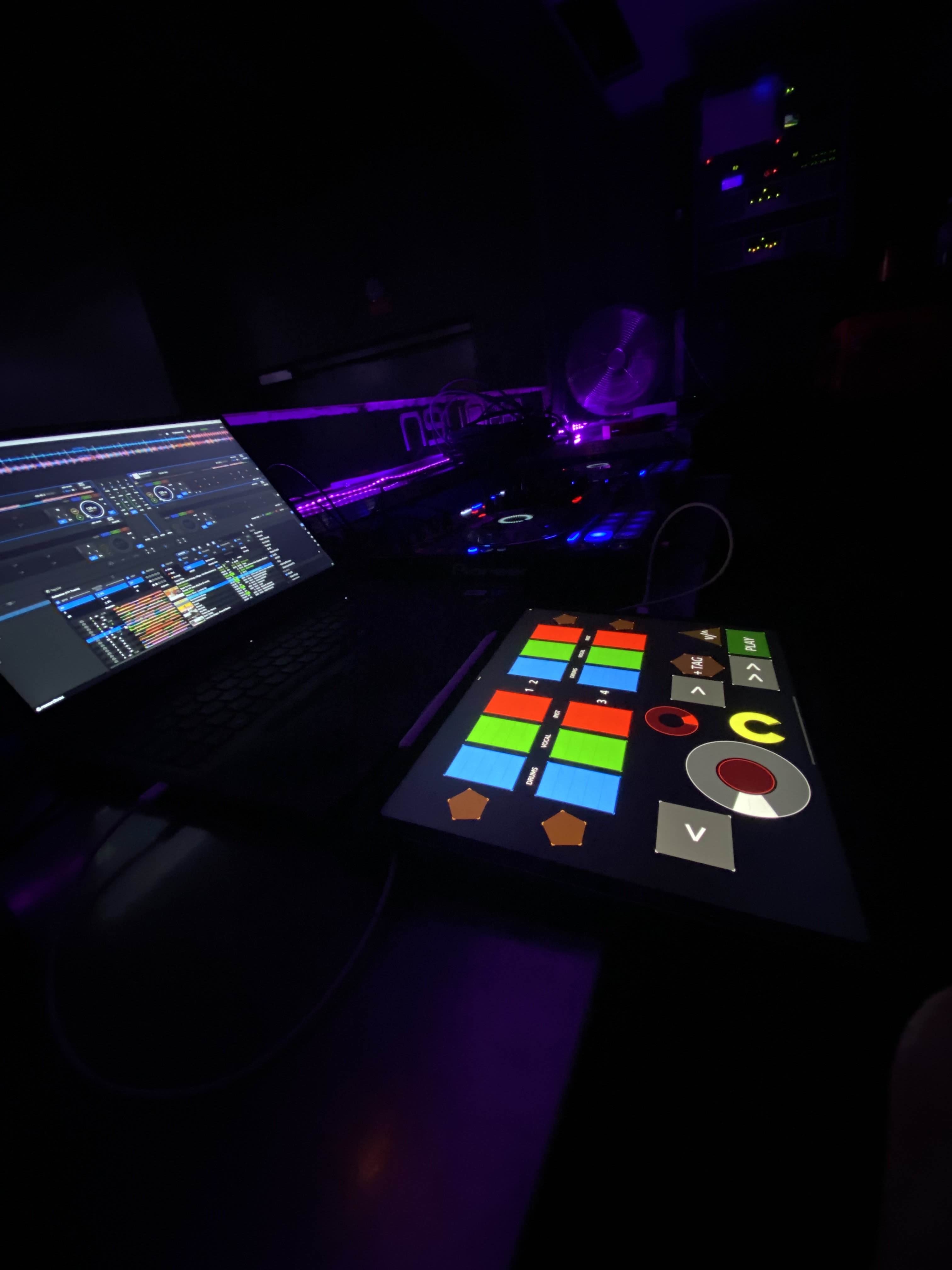
In action
Using touchscreens in live performance situations has proven to be both with pros and cons. Besides the flexibility and cheapness to build new interfaces, not having physical knobs to actuate means you can move several controls at once with good speed and precision. This is really nice when for instance mixing stems, where you need to bring many different elements in and out of the mix at the same time.
This is also the greatest downside: you can't feel where the knobs are and you can't rest your fingers on a control without looking. Not having to focus on where you put your fingers is crucial when there's so many different things requiring your attention at the same time. For faders and rotaries there is a sort-of solution called "relative" control. Instead of directly setting a value to the absolute position of your finger, you only apply the movement/delta to the current value, sort of like scrolling it. Now you can rest your finger on the control and be immediately ready to change it without looking.
This however means you no longer feel the absolute value without looking which just doesn't work for the really fine and time-critical controls. You can't flick that kind of control fast enough like a physical fader, and you can't just tap it to instantly set a value. This led me to thinking about whether you could add some physical cue when in absolute mode to help you find the right position:
Experiments in physical overlays
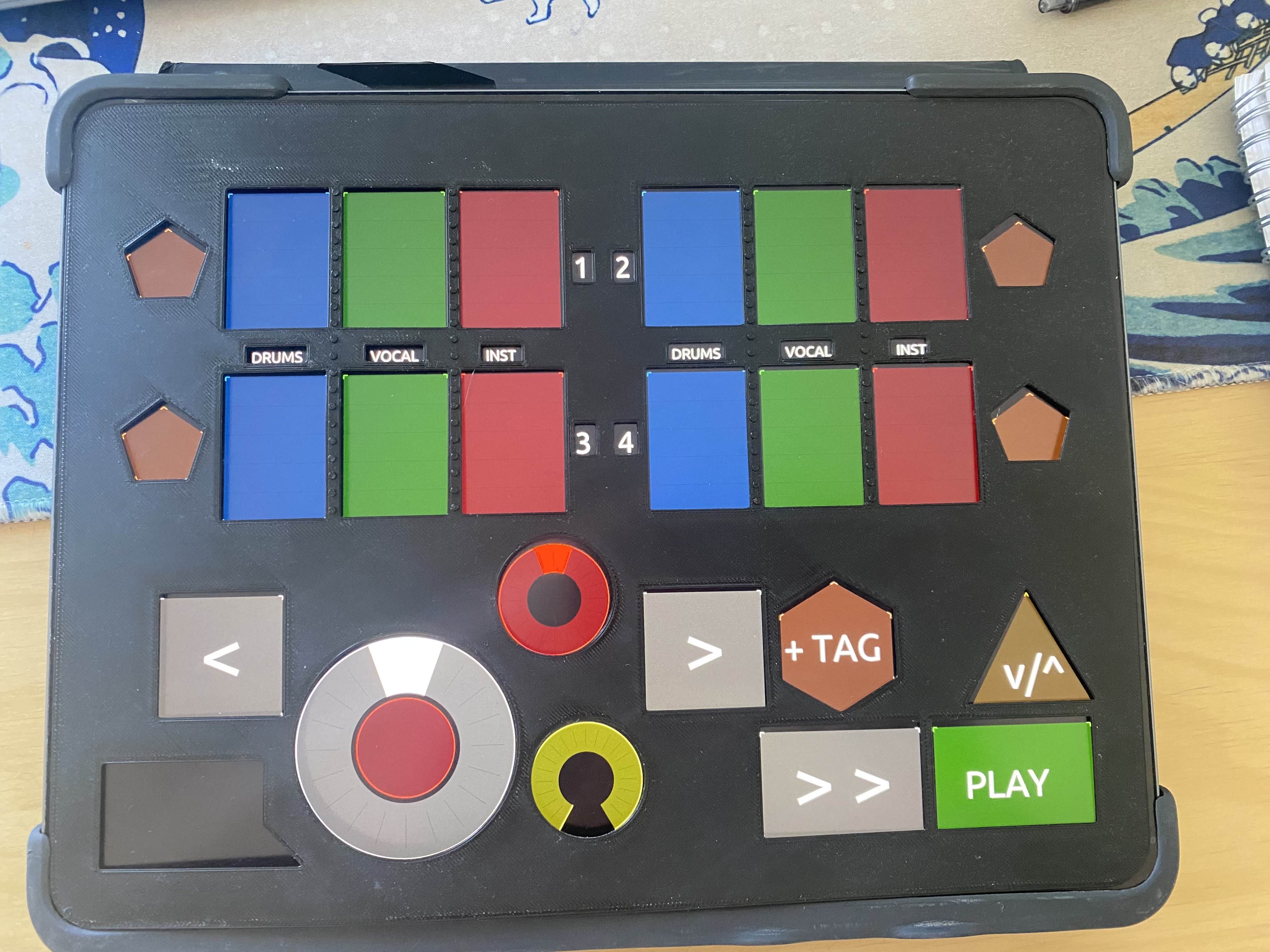
It's gotten a bit bent out of shape
My first attempt was to 3D-print or cut an overlay blocking any non-control area. Using it live I quickly noticed it does not actually help at all, since you still can't rest your finger on anything with confidence. You could use the edge of each button, but that's just too finnicky.
My next idea is probably to add some kind of sparse grille over the buttons which blocks your finger when touching lightly, but you can press your finger through/around with a little force.
TouchOSC controllers
Here are the layouts I've actually used while DJing. They are all built with the TouchOSC app which honestly is one of the nicest pieces of software I've used. For this application I mostly just use it to send raw MIDI and OSC, but the Lua scripting built-in allows you to do pretty much anything (besides dynamic layouts, as far as I know).
V1
First starting out with only a DDJ-RB which I got second hand for $30, I quickly found it lacking a lot of features. I thus turned to TouchOSC, a great piece of software for turning your phone/tablet into a MIDI/OSC controller.
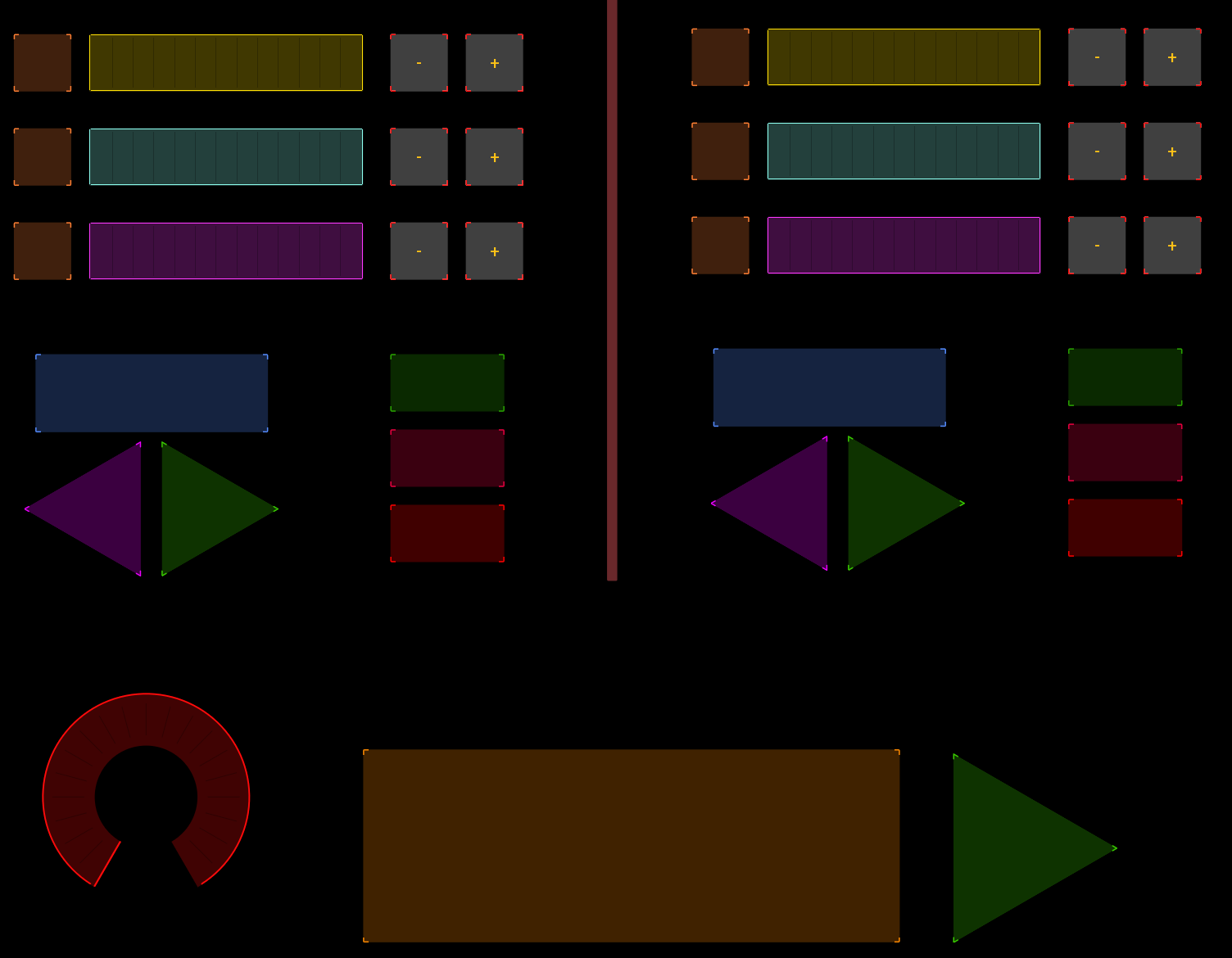
Version 1 for the DDJ-RB
The DDJ-RB lacked looping, multiple FX, browsing buttons and a couple more. So this layout was designed to fill those gaps.
V2
After I got my new (released something like 13yrs ago) DDJ-SX a lot of the features I missed were now built in. Around the same time however, Stems were getting pretty decent and I wanted fine-grained control over these. Getting a whole new controller seemed silly when this dinosaur already had more features than most currently on the market. So here's v2, with four decks:
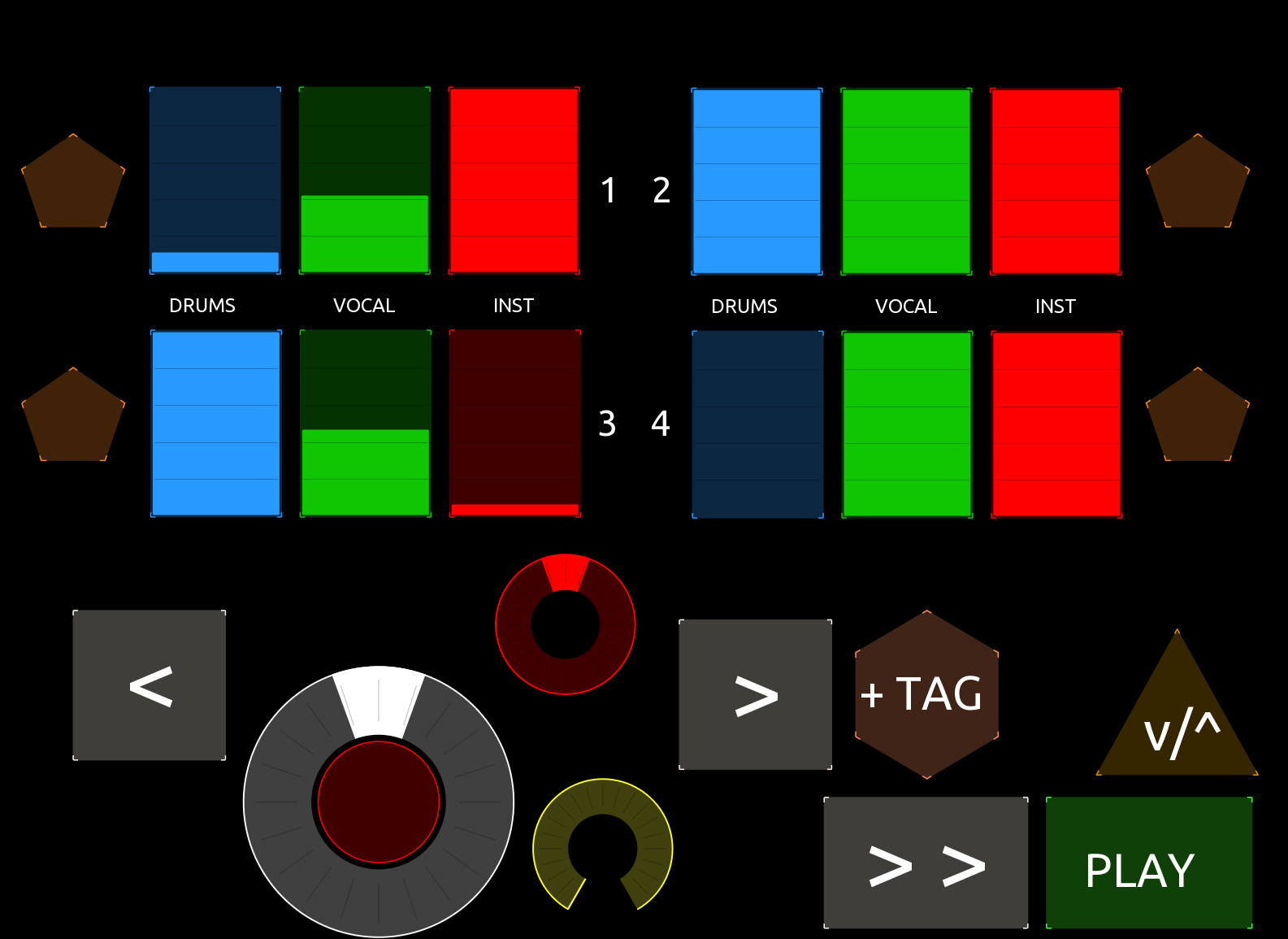
Version 2 for the DDJ-SX
Besides extra browsing buttons, I've also integrated controls for my LED strip I sync to music using my other Rekordbox hack.