The IPT, or International Physicists' Tournament, is an annual competition in experimental physics. 17 open-ended problems are released in the autumn. You then have until April to build models, run experiments and make an intuitive presentation of the phenomenon. The problems are often simply stated but involve complex behaviours and mechanisms. Problems this year covered fluid mechanics (in many forms), magnetics, statistical mechanics, regular mechanics, acoustics and wave optics to name a few.
All the research culminates in so-called "physics fights" where one team presents their theory and experiments and the other tries to poke holes and come up with even better theory or methodology. All of this runs on a timer so you take turns to present and oppose. It's fun to finally get to show off your work, but also intense as you need to create presentations in real-time to respond to the other competitors. Scores are then given by a jury. For a high score you need not only a solid theory that is backed up by actual experiments or simulations, but you also need to present your results in a clear and concise manner as well as be able to give sharp and relevant feedback to other's presentations when opposing or moderating. In the end however you can make pretty much anything fly, as long as you have a good motivation for why your method is accurate for the posed problem.
For good results, besides having done your research, there is also a bunch of game theory because you get challenged on a problem to present. As one of the smallest teams in the competition, we did not have time to cover all problems. You lose points if you turn down too many challenges, but we were fairly lucky and got to present most of our strong solutions.
We almost made it to the finals, but fell short just a few points. In the end we landed a 6th place, which we are all very proud of, especially given our tiny team size!
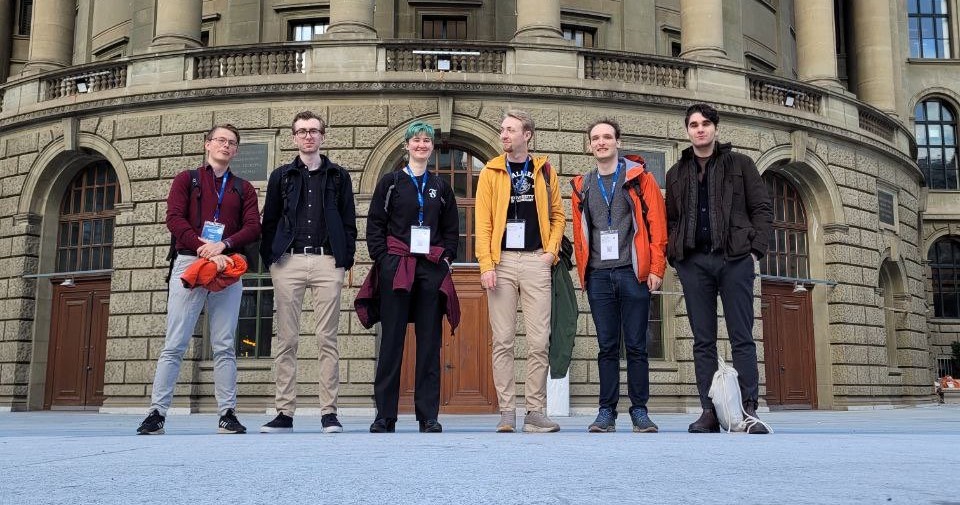
The team, with members from both Chalmers, Göteborgs Universitet and KTH.
In December, the national selection took place in Stockholm. We narrowly beat the team from KTH, but since we were a member short we poached one from them which proved to be a good decision. Thanks for hosting us and thank you for your cool solutions ;)
We also had a couple of field trips, among one to visit the particle accelerator compound at PSI which was absolutely amazing.
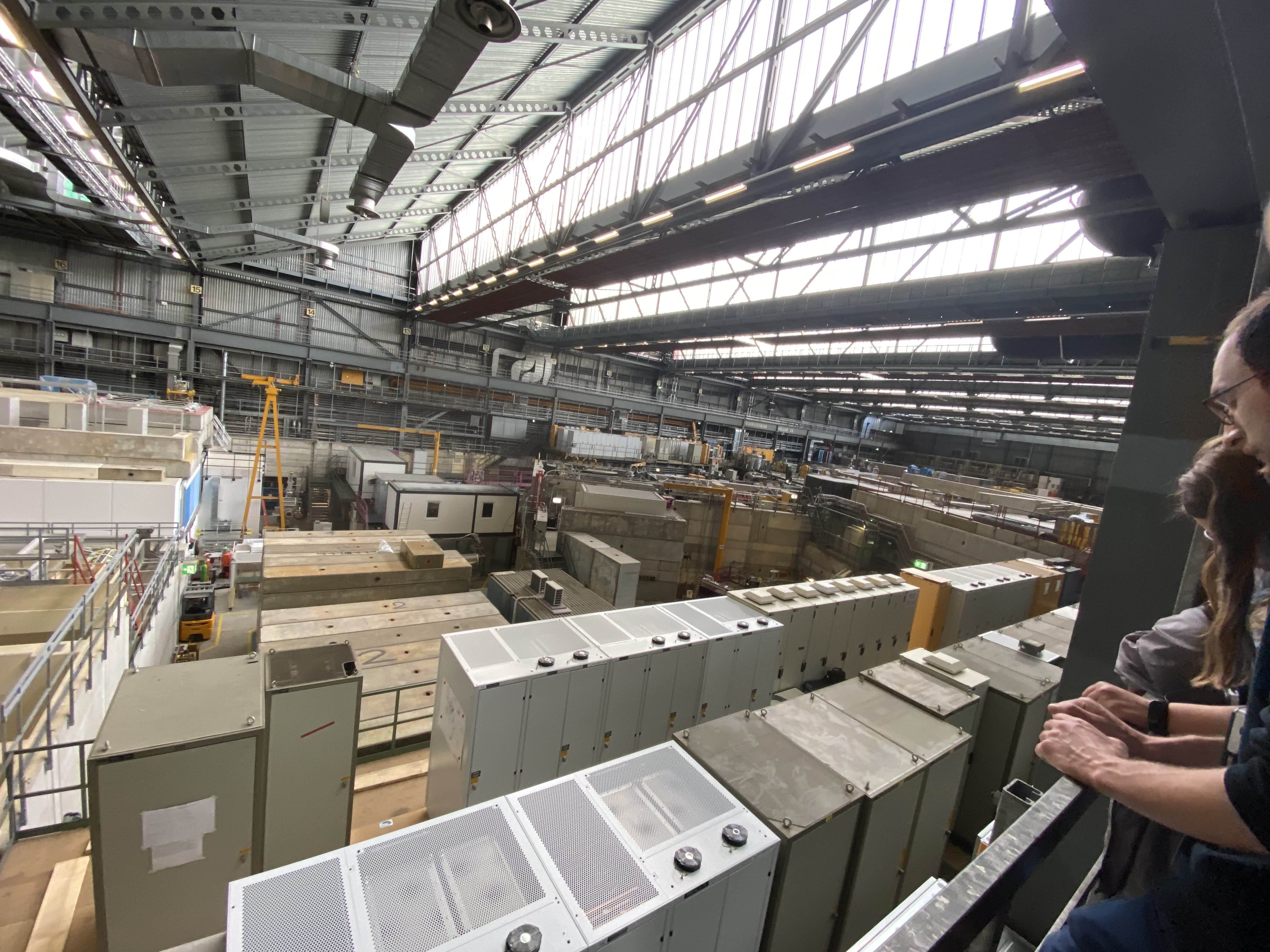
This is just one corner of it. At the far right you can see the concrete coffin housing one of the main particle sources and accelerators, currently opened for maintenance.
My problems
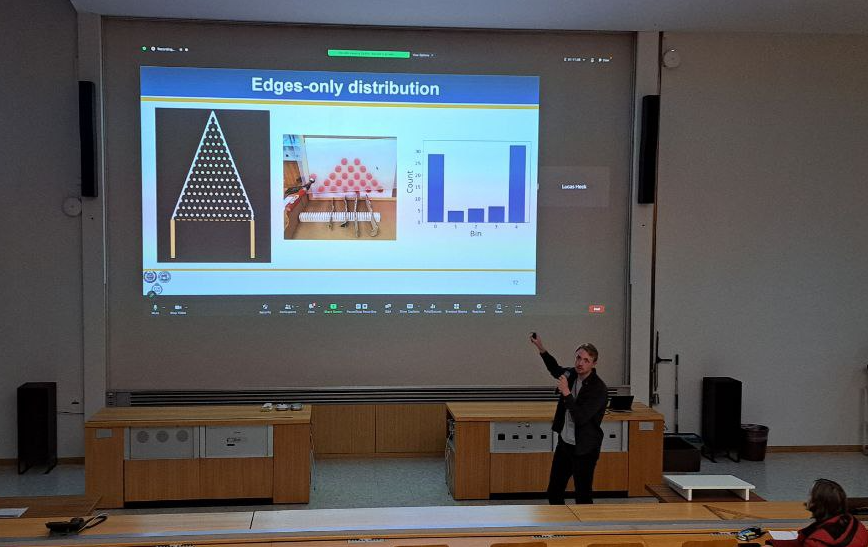
My main problem: the Galton board
The main problem I worked on (besides sticking fingers in everyone else's) was about creating non-standard distributions for a Galton board. I set up a multithreaded simulation using the Rapier2D physics engine to to optimise parameters of the board. Using a genetic algorithm you could set a target distribution and then let it explore the parameter space to find the best layout. I eventually discovered a much simpler method: the spacing between the pegs has a sweet-spot where almost all balls keep travelling in the same left/right direction on the next layer (see the image above). Deviating from this distance means more balls are going to change direction, and modulating this allows you to create pretty much any distribution. Areas with a high probability of changing direction act as sinks where balls accumulate.
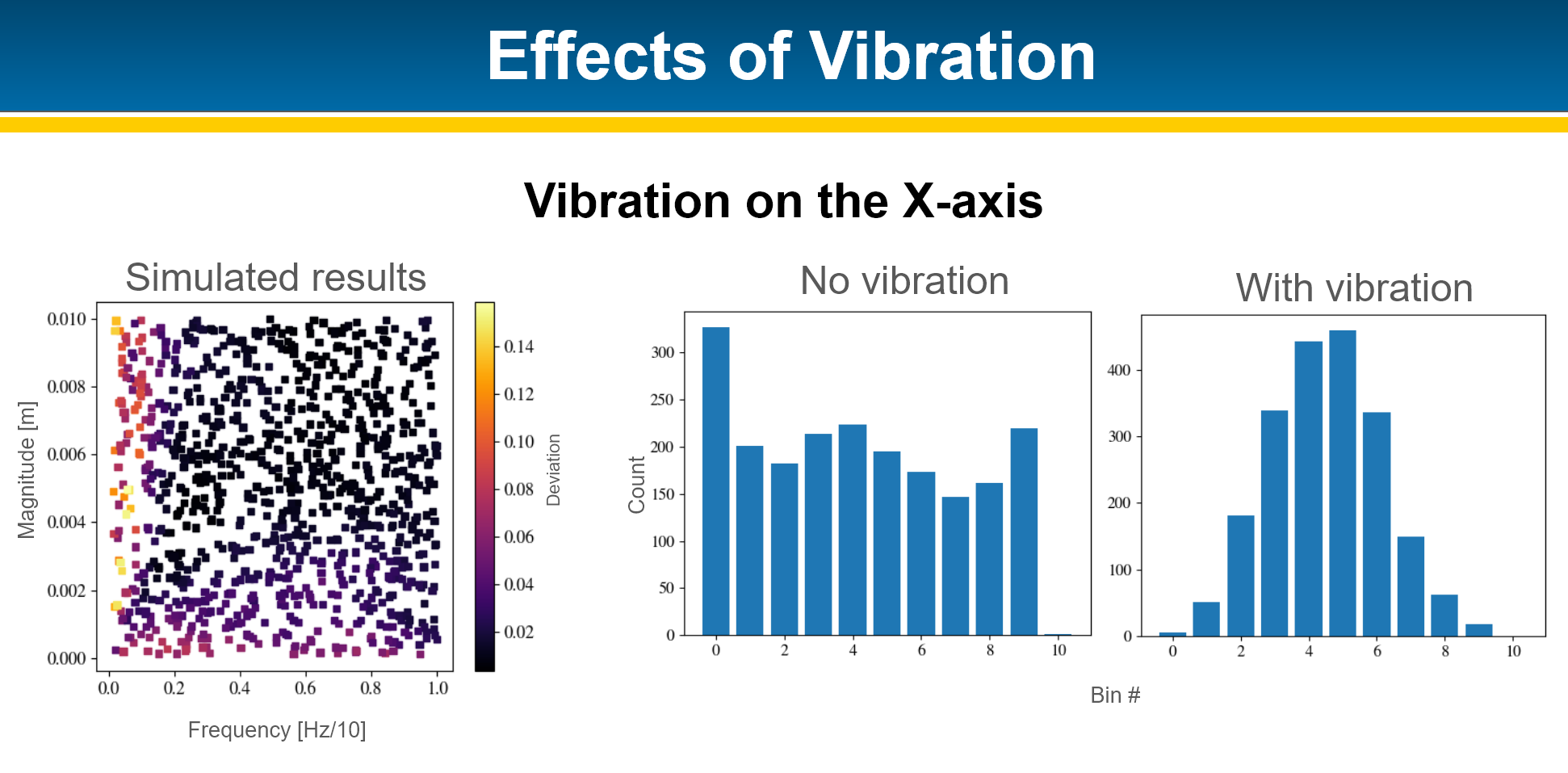
Results generated by the simulation, showing a parameter space exploration. Vibration adds more randomness, making each choice more identically distributed, thus making the output more normally distributed.
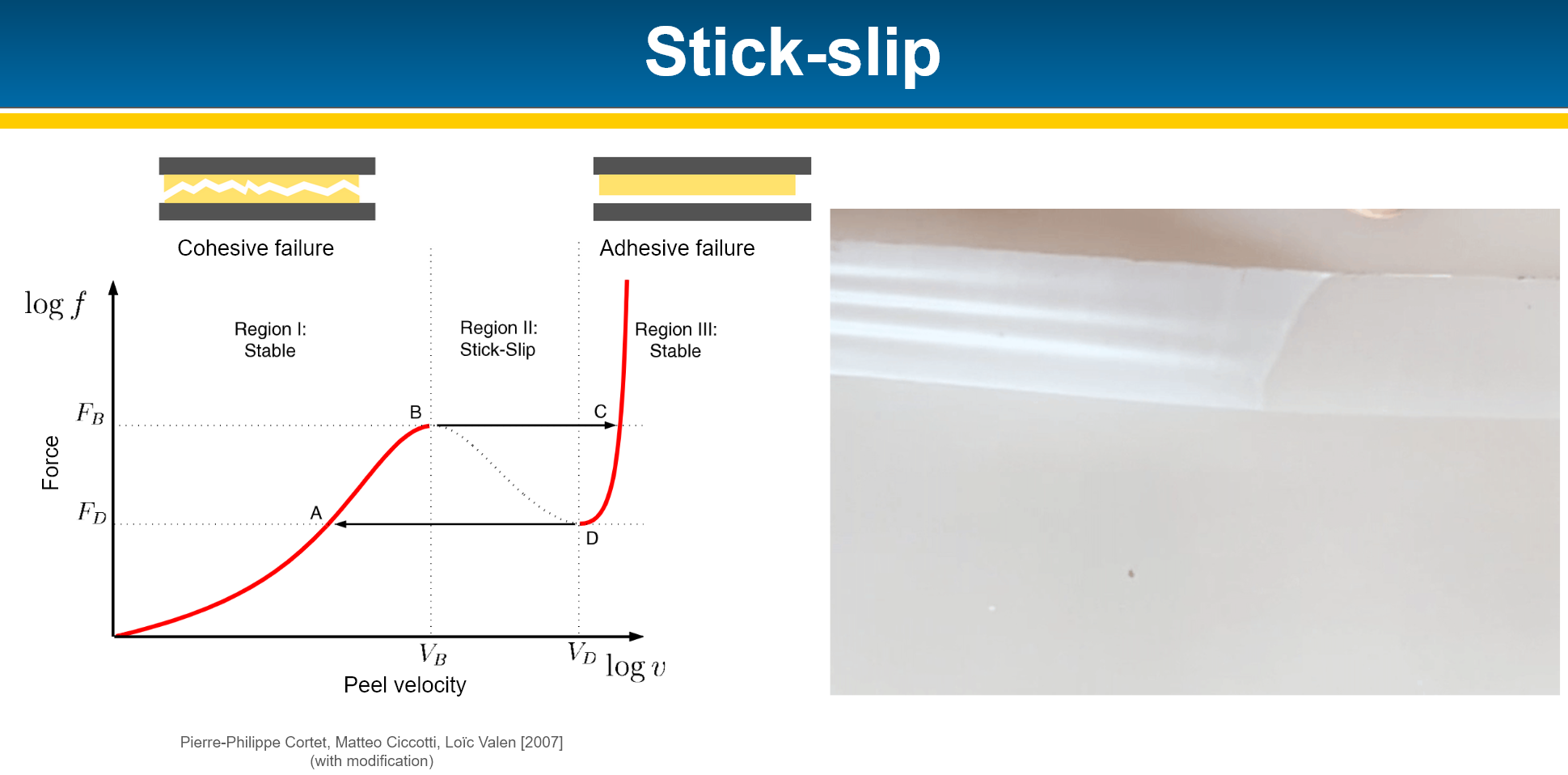
My other main problem: unrolling tape
My second main problem was regarding the sound made by unrolling tape. This however is already relatively well understood and researched, so it was more of a theoretical problem explaining the effect and demonstrating it.